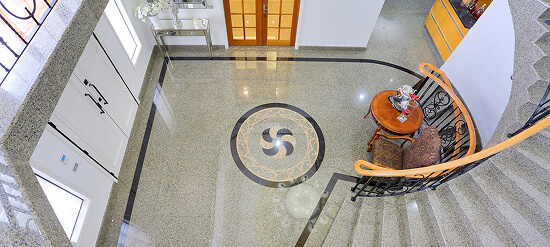
The entry was constructed around a full-height void, creating space for a curved staircase that defines the interior. Stone treads, wrought iron balustrading, and a timber handrail were installed in sequence, with a circular inlay set into the floor to anchor the base of the staircase.
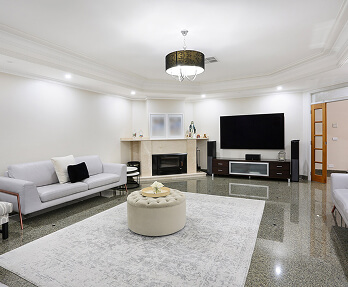
Polished stone flooring extends across the entire ground level, including entry, living areas, and kitchen. Installation required staged levelling and precise alignment to maintain a consistent finish, with borders and feature inlays used to define spaces without breaking continuity.
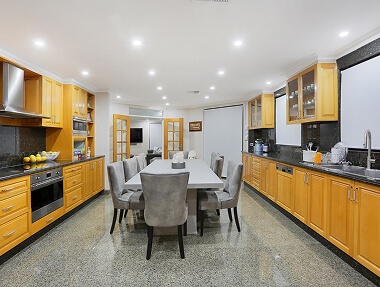
The kitchen was built with extensive timber cabinetry and stone benchtops, positioned around a central dining space. A curved bar was incorporated into the adjoining living area, reflecting the shape of the staircase and requiring coordinated installation across joinery, services, and finishes.
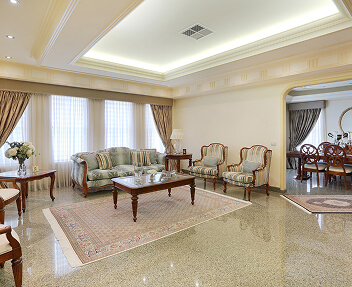
Multiple living zones were established across the ground floor, supporting both formal and informal use. The open-plan design required careful sequencing of flooring, wall finishes, and ceiling details to ensure each space connected cleanly without variation in finish.
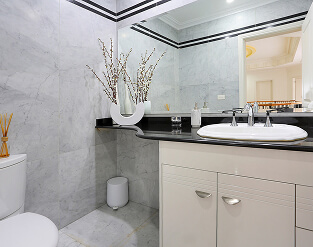
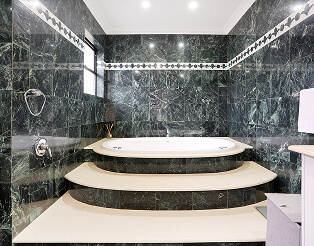
Bathrooms were completed with full-height tiling, including a feature bathroom finished in darker stone with a built-in spa. Installation was coordinated across plumbing, framing, and tiling stages to ensure the correct positioning and alignment of all fixtures and finishes.
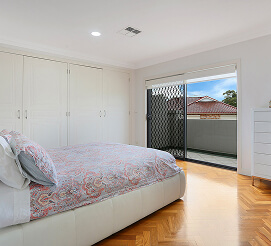
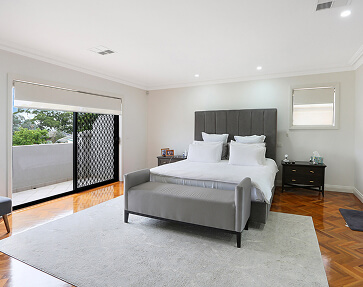
The upper level includes additional living and bedroom spaces connected by a gallery overlooking the entry void. A tiled balcony extends from this level, continuing the use of durable finishes while maintaining consistency with the rest of the home.
The open layout and continuous flooring meant multiple trades needed access to the same spaces at different stages. Work was structured into defined phases, allowing each trade to complete its portion before the next began, maintaining both efficiency and quality.
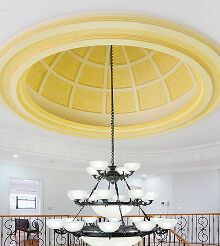
The staircase, chandelier, and full-height bathroom finishes required precise placement within the structure. Ongoing site supervision allowed adjustments during installation, ensuring each feature aligned correctly with both the structural framework and final finishes.